How to Start a Service Business From Zero: Seven Grassroots Steps
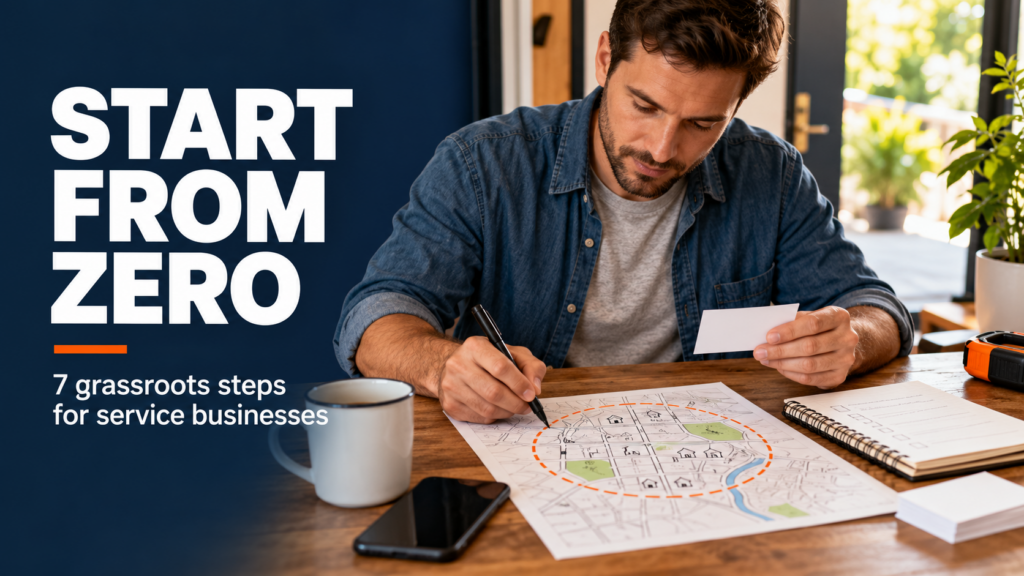
Start with a clear offer, a way to be reached, and conversations close to home.
You do not need a polished website or an advertising budget to have your first conversation with a potential customer. You need to know what you offer, give people a way to reach you, and start talking to the right people.
If you are starting a service business with little or no experience, work through these seven steps in order. You can improve each one as you learn what customers actually need. I can help you accomplish every step, whether you need a few pointers or want someone to work through it with you.
1. Know exactly what you offer
Before you print a card or post an ad, make sure you can explain your service in plain language. Answer five questions:
- Who do you help?
- What work do you do, and what is included?
- When are you available?
- Where do you work?
- Why should someone choose you?
If you are new, be honest about that. You do not need to claim years of experience. You do need a clear scope, a realistic promise, and a plan to follow through.
Try this sentence: “I help [type of customer] with [specific service] in [service area]. I am available [timeframe], and you can reach me at [contact method].”
How I can help: I can help you define your offering, identify the customers most likely to need it, and turn your answers into a clear description you can use everywhere.
2. Get a business card—and use it
A business card is a small announcement: I am in business, this is what I do, and here is how to reach me. It also gives someone an easy way to pass your name along.
Keep it simple. Include your name or business name, your service, your service area, and a phone number or email you will actually answer. A clean print-at-home card or Avery label can get you started. You can upgrade the printing later.
I also offer a $35 business-card starter. I can help with brand colors, a logo, layout, and the information on the card, then help you get it ready to print. We can discuss printing options before you order.
How I can help: I can work through the design and wording with you so your card tells people what you do at a glance.
3. Research your local five-mile circle
Start close to your home base or office. Look within roughly five miles for people and businesses that might need your service. A short, relevant lead list is more useful than a long list of names with no reason to contact them.
Think about property types, nearby businesses, real estate agents, property management companies, and complementary trades. For each possible lead, note why your service might be useful and the best way to introduce yourself.
How I can help: I can show you how to find and prioritize local leads, help do the research, or help you find someone to outsource it to.
4. Canvass and make local introductions
Take your cards and visit a few high-value contacts. If you work in a trade, real estate agents and property managers may be good people to meet. Talk with people while you are out, ask who handles the kind of work you do, and leave a card when it is welcome.
Keep the conversation brief: “I work locally on [service]. Who handles that type of work for your properties or customers?”
Write down whom you met and when to follow up. Respect posted solicitation rules and move on politely when someone is not interested.
How I can help: I can help plan a route, choose the best places to visit, prepare what to say, and organize your follow-up.
5. Participate in local Facebook groups
Many local Facebook groups are places where people ask for recommendations. Find groups that fit your service area, read their rules, and answer relevant questions helpfully. Share examples of your work when the group allows it. A useful answer often does more than a generic sales pitch.
Meta ads can put your offer in front of more local people, but get your message and follow-up process ready before spending money.
How I can help: I can help find relevant groups, write posts and responses, and plan a focused Meta ad campaign when you are ready.
6. Set up your Google presence and try suitable listings
A Google Business Profile can help nearby customers find your hours, service area, photos, and contact information. Keep those details accurate and consistent with your card. If you later try Google Ads, set a budget and track the inquiries you receive.
Look at other suitable places to list your service, too, such as local community boards, marketplaces, and Craigslist where your type of listing is allowed. Check the current rules and any fees before posting. Give each listing a specific headline, a clear description, and a way to contact you.
How I can help: I can help prepare your Google profile content, write your listings, choose where to post, and set up a simple way to track results.
7. Low Cost Listing Services
Build a Simple Web Site w/ Blog
Once you know what to say about your service, a website gives people one reliable place to learn more. It does not have to be complicated. Start with what you do, who you help, where you work, examples you have permission to show, and an easy way to contact you from a phone.
Your website can grow as your services and experience grow. The first version should help a potential customer decide whether to call.
How I can help: I can help plan, write, design, and build a website that explains your service and makes the next step clear.
Start with one conversation
You can begin before all seven steps are finished. Explain your offer, give someone a way to reach you, and speak with a potential customer. Keep track of the questions they ask. Those conversations will help you improve your card, posts, listings, and website.
Want help getting started? Reach out to me. Tell me what service you want to offer and where you want to work. We can start with the first step you need and build from there.
About Author